
In an era defined by relentless technological advancement, few forces are as profoundly reshaping our professional lives as Artificial Intelligence. Consider this: recent data suggests that generative AI tools alone could automate up to 70% of tasks across various roles, potentially saving billions of hours annually. This isn’t just a fleeting trend; it’s a seismic shift, with AI, particularly its generative forms like ChatGPT, Google Bard, and Microsoft Copilot, rapidly integrating into the fabric of our daily workflows. These intelligent systems are no longer confined to the realm of science fiction; they are here, now, learning our patterns, augmenting our abilities, and challenging our traditional notions of labor and value creation.
The widespread adoption of AI sparks both immense excitement and considerable apprehension. Companies are scrambling to leverage AI for streamlined operations, while individuals ponder the security of their jobs and the skills they’ll need to thrive in this new landscape. Discussions abound on job displacement, the imperative for new skill sets, the ethical complexities of algorithmic decision-making, and the sheer transformative potential of AI to redefine professional roles and operational models. Major tech news outlets consistently feature articles, analyses, and case studies on how AI is reshaping how we work, making it a highly relevant and continuously evolving topic for a Medium audience interested in technology, productivity, and the future. This article will delve into the multifaceted impact of AI on productivity, the evolution of job roles, and the broader future of work, offering crucial insights into how individuals and organizations can not only adapt but truly thrive amidst this technological revolution. We will explore the tangible productivity gains, the imperative shifts in job functions and required skills, and the critical ethical considerations that must guide our journey into an AI-driven future.
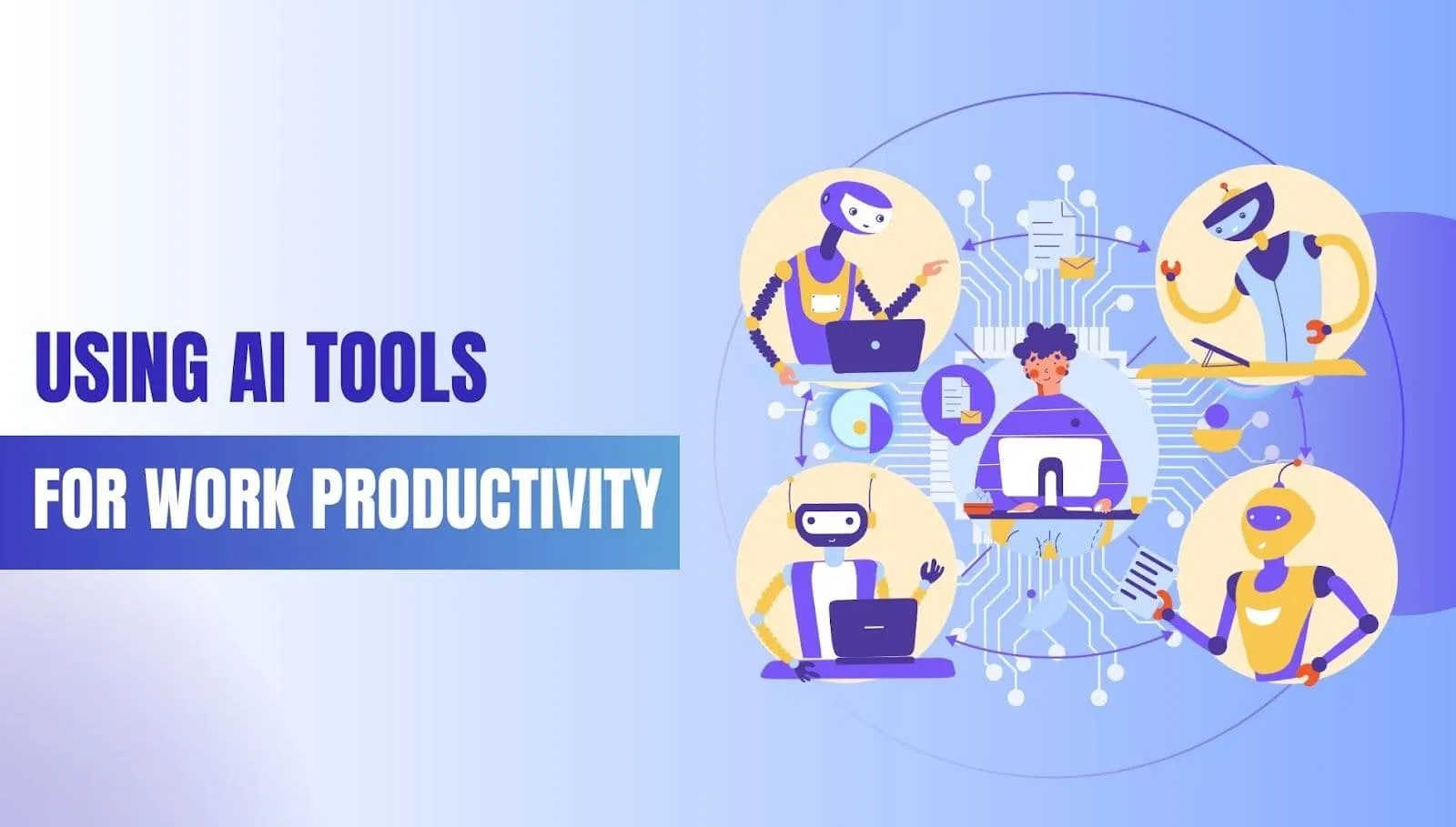
Table of Contents
- AI’s Immediate Impact on Productivity: A Catalyst for Efficiency
- The Evolving Landscape of Work and Job Roles
- Navigating the Future: Challenges and Opportunities
- Conclusion: Embracing a Transformed Future
AI’s Immediate Impact on Productivity: A Catalyst for Efficiency
The most immediate and discernible impact of AI on the professional world is its profound ability to supercharge productivity. By intelligently automating tasks that were once time-consuming, repetitive, or prone to human error, AI frees up invaluable human capital, allowing us to redirect our focus towards more strategic, creative, and inherently human endeavors.
Streamlining Workflows and Automating the Mundane
At its core, AI excels at identifying patterns and executing rule-based tasks with unparalleled speed and accuracy. This capability is revolutionizing how we approach daily work:
- Data Entry and Processing: AI-powered tools can parse vast amounts of information, extract relevant data, and populate databases far quicker and more accurately than any human. This eliminates a significant administrative burden, especially in sectors like finance, healthcare, and logistics.
- Report Generation: From financial summaries to marketing performance analytics, AI can compile, analyze, and even draft initial versions of comprehensive reports, allowing professionals to spend less time on aggregation and more on interpretation and strategy.
- Email Drafting and Management: Generative AI assistants can compose professional emails, summarize lengthy threads, or even prioritize incoming messages, helping individuals manage their inboxes more efficiently and communicate more effectively.
- Scheduling and Calendar Management: AI-driven scheduling tools can coordinate meetings across multiple calendars, suggest optimal times, and even send reminders, reducing the friction associated with complex logistical tasks.
- Content Creation at Scale: Whether it’s generating initial blog outlines, social media captions, or even code snippets, AI assists in accelerating the creation of content, offering a powerful starting point for human refinement.
By delegating these repetitive tasks to AI, human workers can dedicate their cognitive energy to complex problem-solving, innovation, critical thinking, and interpersonal collaboration – areas where human intelligence remains indispensable. This shift is not about replacing humans but augmenting our capabilities, making us more effective and impactful.
Enhanced Efficiency and Speed Across the Board
Beyond automation, AI tools fundamentally accelerate processes and significantly improve the quality of output, redefining what’s achievable within a given timeframe:
- AI-Powered Research: Imagine sifting through gigabytes of academic papers, market reports, or legal precedents in seconds. AI can do just that, identifying key information, summarizing findings, and even cross-referencing sources, drastically cutting down research time for academics, legal professionals, and market analysts.
- Code Generation and Debugging: Developers are leveraging AI to write boilerplate code, suggest improvements, and even identify and fix bugs, dramatically speeding up development cycles and improving software quality. For a deeper dive into how AI is boosting tech capabilities, consider exploring articles on the ultimate guide to the AI chip race.
- Content Creation and Optimization: AI helps marketers craft compelling ad copy, personalize customer communications, and optimize content for SEO, leading to higher engagement and better campaign performance.
- Design Assistance: Graphic designers can use AI to generate mood boards, propose layout variations, or even create initial design elements, accelerating the creative process and allowing for more experimentation.
- Personalized Learning and Development: AI can tailor training programs and learning paths for employees, identifying skill gaps and recommending relevant resources, thus accelerating professional development. For more on this, see our piece on AI in education and learning.
Data-Driven Decision Making with AI
One of AI’s most transformative contributions to productivity lies in its ability to analyze massive, complex datasets at speeds and scales impossible for humans. This capability translates directly into better business outcomes:
- Predictive Analytics: AI algorithms can forecast market trends, predict consumer behavior, identify potential risks, and optimize resource allocation, empowering leaders to make proactive, informed decisions rather than reactive ones.
- Customer Insights: By analyzing customer interactions, purchasing patterns, and feedback, AI provides deep insights into preferences and pain points, enabling companies to offer highly personalized products, services, and support.
- Operational Optimization: In manufacturing, logistics, and supply chain management, AI can optimize routes, manage inventory, predict equipment failures, and streamline complex operations, leading to significant cost savings and increased efficiency.
Personalized Productivity: Your AI Assistant
AI is also becoming an increasingly personal tool, acting as an intelligent assistant to optimize individual work habits and task management. From smart reminders that adapt to your schedule to tools that help prioritize emails based on urgency and sender, AI helps individuals manage their cognitive load and maximize their most productive hours. The Federal Reserve Bank of St. Louis highlights this impact, noting that generative AI could lead to a substantial increase in worker productivity. Their data suggests that workers could save up to 5.4% of their work hours, translating to a 1.1% increase in overall productivity. (Source: St. Louis Fed) This indicates that AI is not just about organizational gains but also about empowering individuals to manage their time and tasks more effectively. For a broader understanding of how AI is revolutionizing various sectors, see this article on AI revolution trends and impact.
The Evolving Landscape of Work and Job Roles
The advent of AI heralds a profound transformation in the nature of work itself. While fears of widespread job displacement often dominate headlines, a more nuanced understanding reveals a landscape of augmentation, evolution, and the emergence of entirely new professional categories.
Job Augmentation vs. Displacement: A Balanced Perspective
The narrative around AI and jobs often swings between two extremes: mass unemployment or utopian efficiency. The reality, at least in the near to medium term, lies in augmentation. AI is proving to be a powerful co-pilot, enhancing human capabilities rather than completely replacing them.
- AI as a Tool: Think of AI not as a replacement for a human worker, but as an advanced tool within a worker’s arsenal, much like spreadsheets revolutionized accounting or CAD software transformed design. Vanguard’s projections support this view, indicating that AI is likely to positively impact as many as 80% of jobs, enhancing existing functions and allowing employees to achieve more. (Source: Vanguard) For instance, an architect might use AI to generate multiple structural designs in minutes, but the human architect remains essential for creative vision, client interaction, and complex problem-solving.
- Focus on Complementarity: Jobs that require high levels of creativity, emotional intelligence, critical thinking, complex problem-solving, and intricate human interaction are less susceptible to full automation and are, in fact, often enhanced by AI. AI takes over the routine, data-intensive aspects, freeing humans to focus on these higher-order functions. This often results in a reallocation of tasks rather than outright job elimination.
However, it would be disingenuous to ignore the potential for displacement in certain highly routine, predictable roles. Industries heavily reliant on repetitive data processing or simple operational tasks may see a reduction in certain entry-level positions. This underscores the urgency for proactive reskilling and upskilling initiatives. For further insights into the ethical considerations surrounding AI and its impact on the future of work, you might find this article on generative AI breakthroughs, ethics, and the future of work particularly relevant.
The Emergence of New Roles: A New Frontier
Just as the internet created an entirely new ecosystem of jobs from web developers to digital marketers, AI is fostering a vibrant landscape of novel professional opportunities. These new roles demand a blend of technical acumen and understanding of human-AI interaction:
- AI Ethicists and Governance Specialists: As AI systems become more powerful and pervasive, ensuring fairness, transparency, and accountability is paramount. These professionals will design ethical frameworks, audit algorithms for bias, and develop policies for responsible AI deployment. This connects directly to discussions around AI bargaining bills and worker protection laws.
- Prompt Engineers: With generative AI, the ability to craft precise and effective prompts to elicit desired outputs is a crucial skill. Prompt engineers bridge the gap between human intent and AI execution, maximizing the utility of these powerful tools.
- AI Trainers and Data Curators: AI models learn from data. Specialists are needed to prepare, label, and validate vast datasets to ensure AI systems are accurate, unbiased, and perform as intended.
- AI Integration Specialists: These professionals help organizations seamlessly integrate AI solutions into their existing infrastructure, ensuring compatibility and optimal performance. For more on this, check out our guide on effective AI adoption strategies for businesses.
- AI UX/UI Designers: Designing intuitive and effective interfaces for human-AI collaboration will be crucial for widespread adoption.
This emergence of new roles signifies a reallocation of human effort, not its obsolescence. It’s a call to evolve, to embrace new challenges and opportunities presented by AI.
Reskilling and Upskilling Imperative: Adapting for Tomorrow
The most critical response to AI’s impact on work is the imperative for continuous learning. Individuals and organizations must prioritize acquiring new skills to remain relevant and competitive.
- AI Literacy: A foundational understanding of how AI works, its capabilities, and its limitations will be essential for nearly every professional. This doesn’t mean everyone needs to be a data scientist, but understanding concepts like machine learning, neural networks, and prompt engineering will become as fundamental as computer literacy. You can learn more about how different AI capabilities are evolving with advancements like Google Gemini 3.
- Critical Thinking and Problem Solving: As AI handles more routine analytical tasks, the ability to formulate complex questions, evaluate AI-generated solutions, and apply nuanced judgment becomes even more valuable.
- Creativity and Innovation: AI can assist in generating ideas, but the uniquely human capacity for original thought, artistic expression, and imaginative problem-solving will remain premium skills.
- Emotional Intelligence and Collaboration: Roles requiring empathy, negotiation, team leadership, and complex interpersonal communication are inherently human and will be at a premium in an AI-augmented world.
- Data Interpretation and Storytelling: While AI can analyze data, humans are needed to interpret the insights, understand their implications in a broader context, and communicate them effectively to diverse audiences.
- Adaptability and Lifelong Learning: The pace of technological change demands a mindset of continuous learning and adaptability. The jobs of tomorrow may not even exist today, making agility a crucial skill. Explore more about essential new skills for an AI-powered future.
Impact on Different Experience Levels: Leveling the Playing Field?
Interestingly, AI has the potential to disproportionately boost the productivity of less experienced workers. The Dallas Fed observed that AI can increase productivity more significantly for those with less experience. (Source: Dallas Fed) This is because AI tools can provide instant access to expertise, automate remedial tasks, and offer guided assistance, effectively narrowing the knowledge gap between novices and seasoned professionals. For example, a junior marketing associate equipped with AI tools can draft sophisticated campaigns or analyze data with a speed and depth that would traditionally require years of experience. This could lead to a more equitable playing field, allowing newer talent to contribute meaningfully much earlier in their careers.
Navigating the Future: Challenges and Opportunities
The integration of AI into the global workforce is not without its complexities. As we harness its immense potential, we must also proactively address the ethical, social, and economic challenges it presents.
Ethical Considerations: Guiding the AI Revolution
The power of AI necessitates a robust ethical framework to ensure its responsible development and deployment:
- Data Privacy and Security: AI systems often rely on vast amounts of data, raising critical questions about how this data is collected, stored, used, and protected. Ensuring individual privacy and preventing misuse is paramount.
- Algorithmic Bias: AI models learn from the data they are fed. If this data reflects existing societal biases (e.g., racial, gender, socioeconomic), the AI can perpetuate and even amplify these biases, leading to unfair or discriminatory outcomes in areas like hiring, lending, or criminal justice. Developing transparent, auditable algorithms and diverse training data sets is crucial. Learn more about AI ethics and responsible development.
- Transparency and Explainability (XAI): Understanding how an AI system arrives at a particular decision (the «black box» problem) is essential for trust and accountability, especially in high-stakes applications. The push for Explainable AI (XAI) aims to make AI decisions more interpretable to humans.
- Accountability: When an AI makes a mistake or causes harm, who is responsible? Establishing clear lines of accountability for AI actions is a complex but vital legal and ethical challenge.
- Misinformation and Deepfakes: Generative AI’s ability to create highly realistic text, images, and videos poses a significant threat of widespread misinformation and manipulation, requiring new strategies for digital literacy and content verification.
These ethical dilemmas are not merely philosophical; they have real-world implications that require thoughtful regulation, industry standards, and public discourse.
Digital Divide and Equity: Bridging the Gap
While AI offers immense benefits, there is a legitimate concern that it could exacerbate existing inequalities:
- Access to Technology: Not everyone has equal access to the necessary infrastructure (high-speed internet, powerful computers) or the financial resources to adopt cutting-edge AI tools. This could create a divide between those who can leverage AI for advancement and those who are left behind.
- Skills Gap: The demand for new AI-related skills might outpace the availability of training and education, particularly in underserved communities. This could widen the gap between skilled and unskilled workers.
- Economic Inequality: If the benefits of AI-driven productivity gains are concentrated among a small segment of the population or corporations, it could lead to increased economic inequality. Policies promoting equitable access to AI education and technologies are crucial. This also touches upon themes discussed when looking at broader technological impacts, such as how AI accessibility can be ensured for everyone.
Organizational Adoption Strategies: Cultivating an AI-Ready Culture
For companies, effectively integrating AI requires more than just purchasing software; it demands a strategic, cultural shift:
- Vision and Leadership: Leaders must articulate a clear vision for how AI will serve the company’s strategic goals and communicate this vision effectively to the entire organization.
- Investment in Training: Companies must proactively invest in upskilling their workforce, providing employees with the training and resources needed to work alongside AI tools effectively.
- Pilot Programs and Iteration: Start with small, manageable AI projects to learn, iterate, and build internal expertise before scaling solutions across the organization.
- Data Governance: Establish robust data governance policies to ensure data quality, security, and ethical use, which are foundational for effective AI.
- Fostering an Experimental Mindset: Encourage employees to experiment with AI tools, share best practices, and view AI as an opportunity for innovation rather than a threat.
- Cross-Functional Collaboration: Successful AI integration often requires collaboration between IT, business units, and HR to ensure alignment and address challenges holistically.
- Embracing Change Management: The shift to an AI-driven workplace requires careful change management, addressing employee concerns, and highlighting the positive impacts of AI augmentation.
Economic Impact and Growth Projections: A Future of Prosperity?
Despite the challenges, the long-term economic outlook for AI is overwhelmingly positive. AI is poised to be a powerful engine for global economic growth:
- Productivity Boom: As AI automates tasks and enhances human capabilities, overall productivity is expected to surge, leading to increased output and potentially higher wages. Wharton’s Public Policy Initiative projects a significant increase in productivity and GDP due to AI, estimating a 1.5% boost by 2035, nearly 3% by 2055, and a remarkable 3.7% by 2075. (Source: Wharton Public Policy Initiative)
- Innovation Catalyst: AI accelerates research and development across all sectors, leading to breakthroughs in medicine, materials science, energy, and beyond, fueling new industries and economic activity.
- Job Creation: While some jobs may be displaced, new ones will emerge, and existing roles will transform. The overall effect could be a net increase in high-value, skill-intensive employment. Intereconomics.eu research indicates that firms actively using AI tend to show positive productivity and, crucially, non-negative employment effects, suggesting that AI drives growth without necessarily reducing the overall workforce. (Source: Intereconomics.eu) This economic dynamism, especially visible with companies like Nvidia driving the AI mania in generative AI tech, points to a future where AI is a fundamental pillar of prosperity.
Conclusion: Embracing a Transformed Future
The journey into an AI-augmented future is not merely a technological upgrade; it is a fundamental transformation of how we work, live, and create value. From streamlining mundane tasks and supercharging our efficiency to reshaping entire job categories and fostering unprecedented economic growth, AI’s impact on productivity and the future of work is profound and undeniable.
We stand at a pivotal moment, where the choices we make today will determine the trajectory of this revolution. AI is not merely a tool to be adopted; it is a transformative force that demands our proactive engagement, ethical considerations, and a commitment to continuous learning. By embracing lifelong learning, experimenting with AI tools, advocating for responsible development, and fostering cultures of adaptability, we can collectively shape a positive, inclusive, and prosperous AI-driven future where human ingenuity is amplified, and our collective potential is truly unleashed. The future of work is not one where humans are replaced by machines, but one where humans and AI collaborate to achieve what was once unimaginable.
Frequently Asked Questions
What is AI’s immediate impact on productivity?
AI immediately supercharges productivity by intelligently automating time-consuming and repetitive tasks, freeing up human capital for more strategic, creative, and inherently human endeavors. This streamlines workflows, enhances efficiency, and enables data-driven decision making.
How does AI change job roles?
AI profoundly changes job roles primarily through augmentation, enhancing human capabilities rather than replacing them. It leads to the evolution of existing jobs and the emergence of entirely new professional categories that require a blend of technical skills and human-AI interaction.
What is the importance of reskilling and upskilling for an AI-driven future?
Reskilling and upskilling are critical for individuals and organizations to remain relevant and competitive in an AI-driven future. This involves acquiring new skills like AI literacy, critical thinking, creativity, emotional intelligence, data interpretation, and adaptability to keep pace with technological change.
What are the main ethical considerations for AI?
The main ethical considerations for AI include ensuring data privacy and security, addressing algorithmic bias, promoting transparency and explainability (XAI) in AI decisions, establishing accountability for AI actions, and combating misinformation and deepfakes generated by AI.