
Remember when artificial intelligence was the exclusive domain of tech giants, elite research labs, and sci-fi movie plots? For decades, the power of AI seemed locked away behind walls of highly specialized knowledge, multi-million dollar budgets, and computing resources available only to a select few. The idea of an individual or a small startup harnessing the true potential of sophisticated algorithms felt like a distant dream, reserved for institutions capable of pioneering breakthroughs.
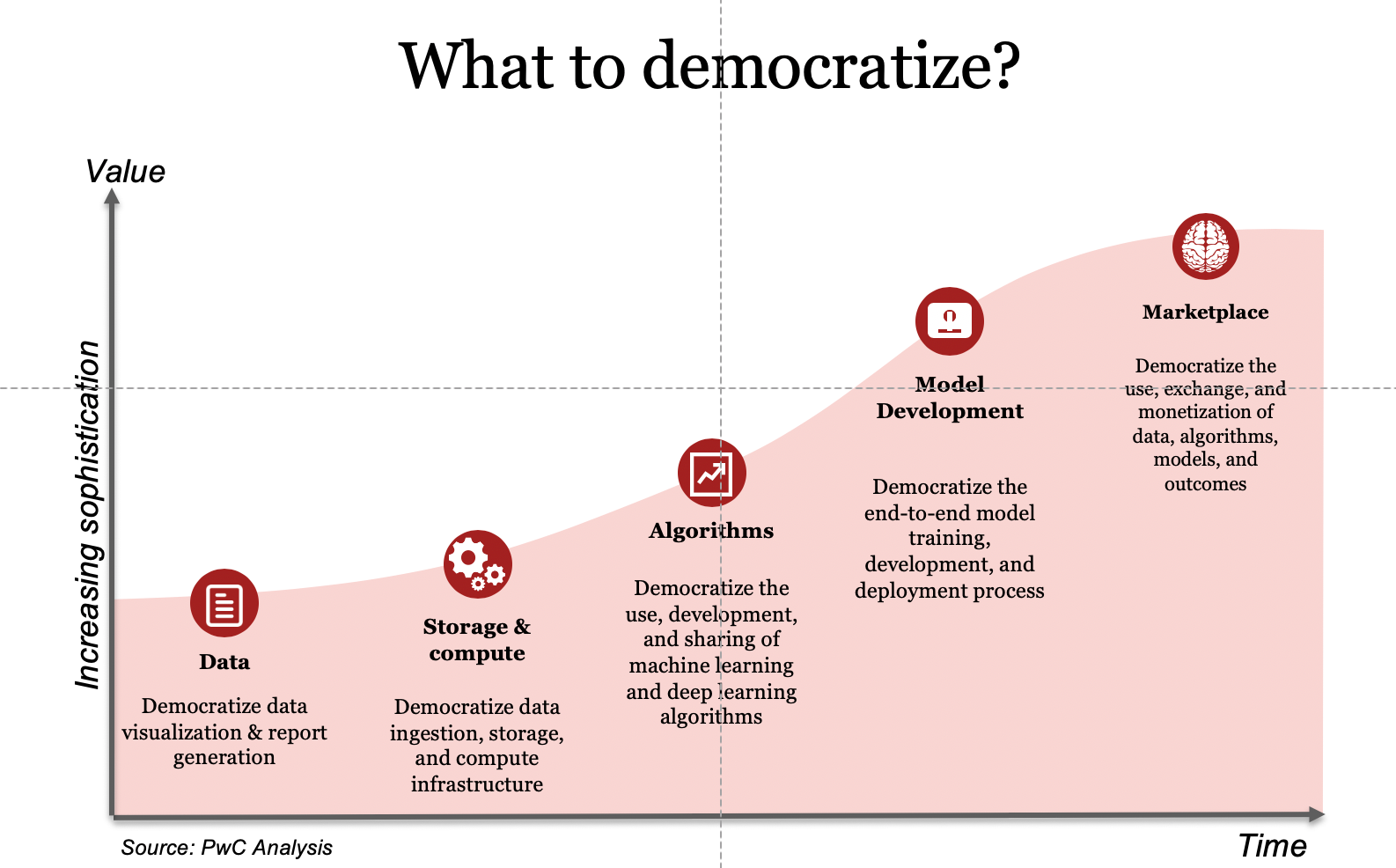
Fast forward to today, and that landscape has dramatically shifted. We are witnessing a monumental transformation, a movement often referred to as the «Democratization of AI.» This isn’t just a buzzword; it represents a profound paradigm shift where AI technologies, once esoteric and inaccessible, are now being made available to a much broader audience, extending far beyond the traditional confines of specialized experts and large corporations. It means that powerful tools, algorithms, and computational models are no longer exclusive, but are instead becoming readily available through user-friendly interfaces, **accessible APIs**, **open-source initiatives**, and more affordable cloud services.
Why does this matter? Because the **democratization of AI** is not merely about making cool tech available; it’s about unleashing unprecedented innovation, boosting productivity across all sectors, and empowering individuals and small businesses in ways that were previously unimaginable. This trend is already reshaping industries, creating new job roles, and fundamentally altering how we interact with technology and solve complex problems.
This article will delve deep into the forces driving this remarkable **AI accessibility**, explore the myriad benefits it offers to diverse groups, acknowledge the critical challenges we must navigate, and cast a speculative eye toward what this future, powered by **everyone’s AI**, truly means for humanity.
The Pillars of Accessibility: How AI is Becoming Everyone’s Tool
User-Friendly Interfaces & No-Code/Low-Code Platforms
Perhaps the most tangible driver of **AI democratization** for the average user is the emergence of intuitive, user-friendly interfaces and robust **no-code/low-code platforms**. Gone are the days when interacting with AI required writing complex lines of code. Today, tools like OpenAI’s ChatGPT have brought advanced natural language processing capabilities into the hands of millions, allowing users to generate text, summarize documents, brainstorm ideas, and even write code, all through simple conversational prompts. Similarly, generative art platforms like Midjourney and DALL-E 3 enable anyone to create stunning visual art from textual descriptions, transforming imaginative concepts into intricate images within moments, without any artistic or coding background.
These platforms are designed with simplicity at their core. They abstract away the underlying computational complexity, offering drag-and-drop functionalities, pre-built templates, and guided workflows that make sophisticated **AI tasks approachable for non-technical users**. This paradigm shift empowers marketers to generate copy, **small business owners** to automate customer service responses, educators to create engaging learning materials, and artists to explore new creative avenues, all without needing a team of data scientists.
Accessible APIs & Cloud Services
While **no-code tools** cater to the end-user, the backend muscle largely comes from **accessible APIs** (Application Programming Interfaces) and powerful **cloud AI services**. Companies like OpenAI, Google Cloud AI, AWS AI, and Microsoft Azure AI are at the forefront of this revolution. They offer their highly sophisticated, pre-trained AI models (such as language models, image recognition models, and speech-to-text engines) as services accessible via APIs.
This means that developers, even those without deep AI expertise or the resources to train their own foundational models, can integrate state-of-the-art **AI capabilities** into their applications with just a few lines of code. A startup building a new e-commerce platform, for instance, can integrate a recommendation engine or a smart chatbot powered by Google’s AI, without having to build and train these complex systems from scratch. This model significantly reduces development time, cost, and the need for specialized AI infrastructure, **making advanced AI readily available** and scalable for businesses of all sizes. The pay-as-you-go model of cloud services further **democratizes access**, allowing small players to leverage enterprise-grade AI without prohibitive upfront investments.
Open-Source AI Initiatives
Complementing commercial offerings, the vibrant **open-source AI** community plays a crucial role in **democratizing AI**. Projects like Hugging Face, TensorFlow, and PyTorch have become cornerstones of this movement. Hugging Face, for example, is a hub for pre-trained models, datasets, and tools, allowing researchers and developers worldwide to share, use, and build upon state-of-the-art AI. TensorFlow and PyTorch, prominent open-source machine learning frameworks, provide the foundational tools necessary for developing and deploying AI models, freely available for anyone to use and modify.
The **open-source model** fosters unparalleled community collaboration, accelerates innovation, and ensures transparency. It allows developers to customize models, experiment with new architectures, and even contribute back to the global knowledge base. This collaborative ecosystem not only makes **AI more accessible** but also drives rapid advancements, ensuring that breakthroughs are shared and improved upon by a diverse global community rather than being confined to proprietary systems.
Affordability & Cost Reduction
Finally, the relentless march of technological progress, coupled with economies of scale and intense competition, has driven down the cost of using **advanced AI**. Cloud computing resources have become cheaper, AI models are becoming more efficient, and the proliferation of accessible tools means the initial investment required to experiment with or implement AI is significantly lower than ever before. This affordability is crucial for individuals, **small businesses**, and educational institutions, removing a major financial barrier that once limited AI to well-funded organizations.
The Impact: Who Benefits from Accessible AI?
The **democratization of AI** isn’t just a technical achievement; it’s a societal one, unleashing a wave of benefits across various segments of society.
Individuals & Creators
For individuals, AI has become a powerful personal assistant and creative partner. Writers can overcome creative blocks and refine their prose using **AI writing assistants**. Digital artists, musicians, and designers can leverage **generative AI** to create entirely new works or enhance existing projects, pushing the boundaries of their creativity. Students can benefit from personalized learning experiences and **AI-powered tutoring**, while everyday professionals can use AI for tasks like summarizing lengthy documents, organizing emails, or generating presentation outlines, significantly boosting their daily productivity. The ability to quickly generate content, whether text, images, or even code snippets, transforms the creative process and makes it **accessible to a wider array of talent**.
Small Businesses & Startups
Perhaps nowhere is the impact of **AI democratization** more transformative than for **small businesses & startups**. Traditionally, these entities struggled to compete with the vast resources of larger corporations, especially in areas requiring specialized tech. Now, **accessible AI levels the playing field**.
**Small businesses** can automate customer service with **AI-powered chatbots**, providing 24/7 support without the overhead of a large call center. They can utilize AI for sophisticated marketing analytics, personalizing campaigns and optimizing ad spend with precision previously reserved for giants. Inventory management, supply chain optimization, and even basic data analysis can be streamlined, allowing owners to focus on core business growth rather than tedious operational tasks. For **startups**, AI offers the ability to rapidly prototype innovative solutions, develop new products, and scale operations with limited capital and human resources, turning ambitious ideas into reality with unprecedented speed.
Developers & Researchers
Even for those already immersed in technology, **accessible AI** brings immense advantages. Developers can integrate advanced functionalities into their applications much faster, focusing on novel features and user experience rather than spending months training foundational models. This acceleration of development cycles means more **AI innovation**, quicker iteration, and the ability to bring cutting-edge solutions to market faster. Researchers, too, benefit from readily available tools and models, enabling them to test hypotheses, analyze vast datasets, and focus on pushing the boundaries of AI itself, rather than reinventing the wheel with basic infrastructure. The **open-source movement**, in particular, fosters a more diverse and inclusive AI community, inviting contributions from all corners of the globe.
Industry-Wide Transformation
Beyond individuals and businesses, entire industries are being reshaped by **accessible AI**:
- Healthcare: AI assists in accelerating drug discovery, personalizing treatment plans, and improving diagnostic accuracy for diseases from cancer to rare genetic disorders.
- Finance: AI enhances fraud detection, provides personalized financial advice, and automates complex trading strategies, making financial services more efficient and secure.
- Education: Adaptive learning platforms powered by AI tailor educational content to individual student needs, identifying learning gaps and offering targeted support, thereby making education more effective and inclusive.
- Manufacturing: AI optimizes production lines, predicts equipment failures, and enhances quality control, leading to greater efficiency and reduced waste.
Navigating the New Frontier: Challenges and Responsible Use
While the **democratization of AI** brings immense promise, it also introduces a new set of complex challenges that demand careful consideration and proactive solutions. A balanced approach requires not just embracing the technology, but also understanding and mitigating its potential pitfalls.
Ethical Concerns & Bias
One of the most pressing concerns revolves around ethics and bias. AI models are trained on vast datasets, and if these datasets reflect historical or societal biases (in gender, race, socioeconomic status, etc.), the AI will unfortunately learn and perpetuate those biases. This can lead to unfair or discriminatory outcomes in critical areas such like hiring, loan applications, criminal justice, or healthcare diagnostics. For example, a facial recognition system trained predominantly on lighter skin tones might perform poorly on darker skin tones, leading to unjust misidentifications.
Addressing these inherent biases requires continuous effort: diversifying training data, developing methods for bias detection and mitigation, and ensuring transparent and accountable AI development processes. The emphasis must be on fairness, ensuring that **AI benefits all segments of society equitably**, rather than reinforcing existing inequalities. This is a critical area where robust AI ethics and governance frameworks are becoming increasingly vital. (Learn more about AI ethics and governance).
Skill Gaps & Education
As **AI tools** become more prevalent, the nature of work will inevitably evolve. This creates a significant skill gap. While **accessible AI** reduces the need for deep coding knowledge, it amplifies the demand for critical thinking, problem-solving, and the ability to effectively prompt and manage AI systems. Users need to understand AI’s capabilities and limitations, how to interpret its outputs, and how to apply it ethically and strategically.
There is a growing need for continuous learning and upskilling initiatives across all sectors. Educational institutions, corporations, and governments must collaborate to equip the workforce with **AI literacy** and the necessary skills to thrive in an **AI-augmented world**. This isn’t just about technical training but also about fostering digital literacy and critical evaluation of AI-generated information.
Security & Data Privacy
The widespread adoption of **AI tools**, especially cloud-based services, raises significant concerns about security and data privacy. When individuals and businesses input sensitive information into AI models – whether for content creation, data analysis, or customer support – they are trusting third-party providers with their valuable data. The potential for data breaches, unauthorized access, or misuse of proprietary information is a serious risk.
Robust data governance frameworks, strong encryption protocols, and clear privacy policies are paramount. Users must be educated about data security best practices, and **AI service providers** must implement stringent security measures and adhere to strict regulatory compliance (like GDPR or CCPA) to protect sensitive information and maintain public trust.
Misinformation & Deepfakes
The generative capabilities of AI, while incredibly powerful, also pose a threat in the form of misinformation and deepfakes. AI can create highly realistic text, images, audio, and video that are virtually indistinguishable from authentic content. This technology can be weaponized to spread propaganda, create fake news stories, impersonate individuals, or manipulate public opinion, thereby undermining trust in media and democratic processes.
Combating this requires a multi-faceted approach: developing **AI tools for detecting AI-generated content**, promoting media literacy and critical consumption of information among the public, and implementing regulatory measures to mandate disclosure of AI-generated content where appropriate. The challenge is to harness AI’s creative potential while safeguarding against its capacity for deception.
The Road Ahead: What’s Next for AI Accessibility?
The journey of **AI democratization** is far from over; in many ways, it’s just beginning. The trends we observe today are merely precursors to an even more integrated and pervasive future of **AI accessibility**.
Further Simplification & Integration
Expect AI to become an increasingly invisible layer within the tools and platforms we use daily. It won’t be about actively «using AI» but rather having AI silently enhance our existing software, operating systems, and devices. Imagine word processors that instinctively correct factual errors, design software that suggests aesthetic improvements, or operating systems that anticipate your needs based on context. AI will become a seamlessly integrated background utility, **making technology inherently more intelligent and intuitive**.
Specialized AI for Niche Markets
While general-purpose AI models are impressive, the next wave of accessibility will likely involve highly specialized **AI solutions** tailored for niche markets and specific industries. Think AI for bespoke fashion design, AI for optimizing specific agricultural yields, or AI for highly specialized legal research. These targeted AIs will provide deep domain expertise, offering solutions that are hyper-relevant and incredibly efficient for smaller, underserved markets.
Increased Focus on AI Literacy
As AI becomes more ubiquitous, there will be an intensified focus on fostering «AI literacy» – not just among technologists, but across the general populace. This goes beyond understanding how to use an **AI tool**; it involves comprehending its underlying principles, its ethical implications, its limitations, and its societal impact. Education systems will adapt to integrate **AI literacy** as a fundamental skill, empowering citizens to critically engage with AI and responsibly shape its future.
Evolving Regulatory Landscape
Governments and international organizations are already grappling with the complexities of AI governance. The coming years will see an accelerated development of regulatory frameworks designed to address AI’s ethical concerns, ensure data privacy, prevent misuse, and promote responsible **AI innovation**. These regulations will aim to strike a delicate balance: fostering technological advancement while safeguarding societal well-being and individual rights. This evolving landscape will shape how AI is developed, deployed, and **accessed globally**. For a deeper dive, IBM provides insightful perspectives on this dynamic. (Read more from IBM on Democratizing AI).
Conclusion: A Future Powered by Everyone’s AI
The **democratization of AI** is more than a fleeting trend; it’s a fundamental shift in how we conceive, develop, and interact with **artificial intelligence**. From breaking down technical barriers with user-friendly interfaces and **accessible APIs** to fostering collaborative innovation through **open-source initiatives** and **making powerful tools affordable for all**, AI is rapidly moving from the exclusive domain of a few to a ubiquitous resource for many.
This profound transformation promises a future where AI acts not as a replacement, but as a powerful assistant and a force multiplier for human ingenuity. It empowers individuals to amplify their creativity, enables **small businesses** to compete on a global scale, and accelerates **innovation across every industry**, potentially solving some of humanity’s most pressing challenges. The collective intelligence of an increasingly **AI-literate world** has the potential to unlock unprecedented levels of productivity, personalized experiences, and groundbreaking discoveries.
However, with great power comes great responsibility. Navigating this new frontier requires constant vigilance against biases, a commitment to robust data security, proactive measures against misinformation, and a societal dedication to continuous learning and ethical governance.
The journey ahead is one of immense potential and critical considerations. We are all participants in shaping this AI-powered future. Explore how AI can enhance your work or personal projects today. Join the conversation and share your thoughts: What opportunities or concerns does the **democratization of AI** raise for you? Let’s collectively learn more about responsible **AI use** and contribute to building an inclusive, innovative, and equitable **AI future for everyone**.