
Introduction: The Dawn of a New Era
The digital landscape is abuzz with a phenomenon that transcends mere technological advancement: Artificial Intelligence (AI). From powering our search engines and social media feeds to revolutionizing industries and scientific research, AI’s omnipresence is undeniable. It’s no longer a futuristic concept but a tangible force rapidly reshaping our world. The extraordinary breakthroughs in Large Language Models (LLMs) and generative AI—tools capable of creating text, images, and even code with remarkable sophistication—have propelled AI into daily discourse, making it arguably the most talked-about topic across boardrooms, classrooms, and coffee shops alike.
This article aims to demystify the current AI revolution. We will navigate the key trends defining AI in 2024 and beyond, explore its transformative impact across diverse industries, and critically examine the crucial ethical considerations that must guide its development and deployment. By the end, readers will gain a comprehensive understanding of AI’s current trajectory, its profound implications, and the preparedness needed to thrive in an increasingly intelligent future.

The Current Landscape: Key AI Trends Shaping 2024 and Beyond
The rapid evolution of AI means that what was once cutting-edge can quickly become foundational. As we move through 2024, several key trends are not just shaping the technological landscape but actively redefining how we interact with information, create, and innovate.
A. Generative AI Goes Mainstream
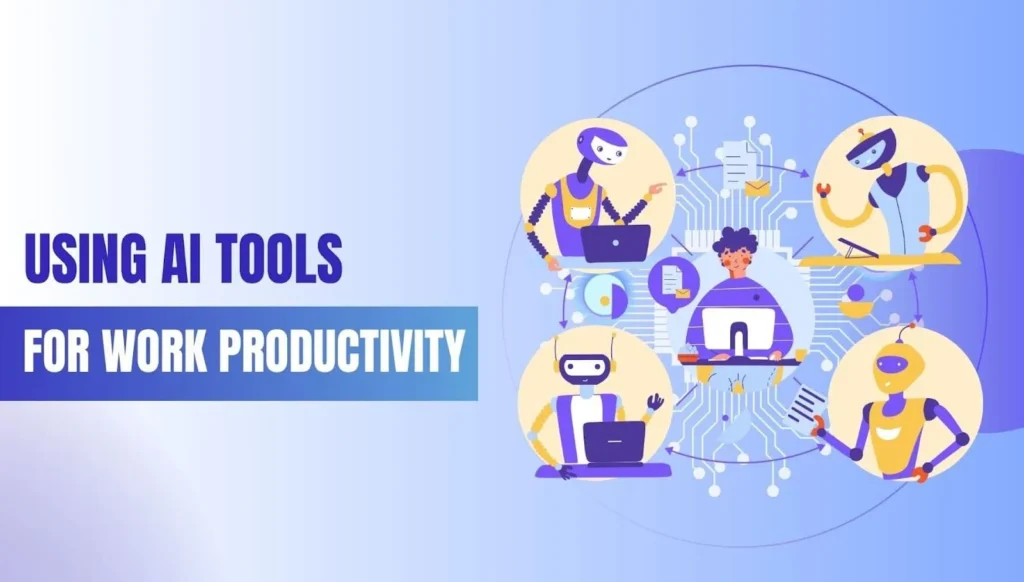
Perhaps the most visible and impactful trend is the ascent of generative AI. These powerful models are designed to produce novel content, blurring the lines between human and machine creativity. From generating human-like text with tools like OpenAI’s ChatGPT to creating stunning visuals with Midjourney and Stable Diffusion, or assisting developers in writing code with GitHub Copilot, generative AI is democratizing creation. It’s enhancing productivity by automating mundane tasks, sparking new forms of artistic expression, and accelerating content pipelines across marketing, design, and entertainment. This surge has made AI a co-creator, a muse, and an invaluable assistant, fundamentally altering our approach to creativity and work.
B. AI-Powered Automation and Hyper-personalization
Beyond content creation, AI is driving unprecedented levels of automation and personalization. In manufacturing, AI-powered robotics and predictive maintenance systems are optimizing production lines, reducing downtime, and enhancing safety. In customer service, intelligent chatbots and virtual assistants handle queries, freeing human agents for more complex issues, while also providing 24/7 support. Healthcare is witnessing AI streamline administrative tasks, manage patient data, and even assist in surgical procedures. Concurrently, hyper-personalization, driven by sophisticated AI algorithms, is becoming the norm. Whether it’s tailored product recommendations on e-commerce sites, adaptive learning paths in education, or custom news feeds, AI is crafting unique experiences for individuals, making digital interactions more relevant and engaging than ever before.
C. AI in Data Analysis and Business Intelligence
Data has long been hailed as the new oil, and AI is the refinery that extracts its true value. Organizations are increasingly leveraging AI for advanced data analysis and business intelligence, moving beyond descriptive analytics to predictive and prescriptive insights. AI models can process vast datasets at speeds impossible for humans, identifying hidden patterns, forecasting market trends, and informing strategic decision-making. From financial modeling to supply chain optimization, AI provides a competitive edge by transforming raw data into actionable intelligence. The crucial aspect here is grounding AI in enterprise data, ensuring that the insights are not only powerful but also relevant and aligned with specific business objectives, as highlighted in the Data and AI Trends 2024 report by Google.
D. Edge AI and TinyML
The processing power of AI is no longer confined to the cloud. Edge AI brings computation and decision-making closer to the data source—directly onto devices like smartphones, smart sensors, and IoT gadgets. This trend minimizes latency, reduces bandwidth requirements, and enhances privacy by processing sensitive data locally. TinyML, a subfield of Edge AI, focuses on deploying machine learning models on extremely low-power, resource-constrained microcontrollers. This enables AI capabilities in a vast array of embedded systems, from smart home devices to industrial sensors, unlocking real-time applications in diverse environments and making AI pervasive in our physical world. For a deeper dive into how machine learning models are optimized for these environments, you might find our article on Optimizing Machine Learning for Edge Devices insightful.
E. AI for Scientific Discovery and Research
AI’s capacity to process complex information and identify intricate relationships is accelerating scientific discovery across numerous fields. In medicine, AI is revolutionizing drug discovery by rapidly screening compounds, predicting their efficacy, and shortening development cycles. It aids in diagnosing diseases earlier and more accurately, from identifying anomalies in medical images to predicting patient outcomes. Material science benefits from AI’s ability to design novel materials with desired properties, while climate modeling uses AI to predict weather patterns, analyze climate change impacts, and propose mitigation strategies. AI is fundamentally changing the pace and scope of scientific breakthroughs, pushing the boundaries of human knowledge.
AI’s Transformative Impact Across Industries
AI is not merely optimizing existing processes; it is fundamentally redesigning entire industries, creating new paradigms for how businesses operate, how services are delivered, and how society functions.
A. Business & Enterprise
For businesses, AI translates directly into enhanced productivity, unprecedented efficiency, and a fertile ground for innovation. Beyond just automating repetitive tasks, AI is empowering strategic decisions. In marketing, AI analyzes consumer behavior to create hyper-targeted campaigns and optimize ad spend. Sales teams leverage AI for lead scoring and predictive forecasting, while operations benefit from AI-driven supply chain management and resource allocation. Studies, such as those cited by National University’s AI Statistics, consistently show that companies integrating AI report significant gains in competitive advantage and bottom-line growth. It’s enabling businesses to innovate faster, adapt to market changes more swiftly, and deliver superior value to customers.
B. Healthcare
The healthcare sector is undergoing a profound transformation thanks to AI. AI algorithms are significantly accelerating drug discovery and development, sifting through vast chemical databases to identify promising candidates. In diagnostics, AI assists radiologists in detecting subtle abnormalities in scans, often outperforming human interpretation in speed and accuracy. Personalized treatment plans are becoming a reality, with AI analyzing individual patient data to recommend the most effective therapies. However, this revolution comes with challenges, including ensuring robust data privacy measures, navigating complex regulatory hurdles for AI-powered medical devices, and addressing the ethical implications of algorithmic decision-making in patient care.
C. Education
AI holds immense promise for revolutionizing education, making learning more accessible, personalized, and engaging. It can create adaptive learning paths that cater to individual student needs and paces, identifying areas where a student struggles and providing tailored resources. AI-powered tools can automate administrative tasks, such as grading repetitive assignments, freeing up educators to focus on more impactful teaching. Content generation tools can create dynamic and up-to-date educational materials. Yet, concerns abound regarding academic integrity in the age of generative AI, the potential for exacerbating the digital divide if access to these technologies is unequal, and the risk of over-reliance on technology diminishing critical thinking skills.
D. Creative Arts & Entertainment
The creative industries are experiencing a fascinating blend of excitement and apprehension. AI-assisted content creation tools are enabling artists, musicians, and writers to generate new ideas, refine existing works, and explore novel artistic forms at unprecedented speeds. Virtual production, using AI-driven real-time rendering, is transforming filmmaking. From generating musical scores to crafting compelling narratives, AI is proving to be a potent creative partner. This raises vital discussions around ownership, copyright, and originality. Who owns the creation of an AI? What constitutes «art» when a machine is involved? These philosophical and legal questions are rapidly becoming central to the future of creativity.
E. Manufacturing & Robotics
AI is the cornerstone of the «smart factory» revolution. In manufacturing, AI-powered systems are enabling predictive maintenance, anticipating equipment failures before they occur, thereby minimizing downtime and costly repairs. Quality control is being enhanced with AI vision systems that detect defects with higher precision and speed than human inspectors. Autonomous robots, guided by AI, are performing complex assembly tasks, working collaboratively with human counterparts in highly flexible production environments. This convergence of AI and robotics is not only boosting efficiency and safety but also driving innovation in product design and production processes.
Navigating the Ethical Minefield: Challenges and Responsibilities
As AI’s capabilities grow, so do the ethical dilemmas it presents. Ensuring responsible AI development and deployment is paramount to harnessing its benefits without succumbing to its potential pitfalls.
A. Bias and Fairness
One of the most pressing ethical challenges is the issue of bias. AI systems learn from the data they are fed, and if that data reflects existing societal prejudices—whether related to race, gender, socioeconomic status, or other factors—the AI will unfortunately perpetuate and even amplify those biases. This can lead to discriminatory outcomes in critical areas like loan applications, hiring processes, and even criminal justice systems, as extensively discussed by organizations like UNESCO in its recommendations on AI ethics and CapTech University’s insights. Addressing this requires rigorous attention to diverse, representative datasets and the implementation of ethical AI design principles from inception.
B. Job Displacement and the Future of Work
The rapid advancement of AI-driven automation raises significant concerns about job displacement. While AI is poised to create new jobs, it will undoubtedly automate many routine and predictable tasks, potentially impacting vast segments of the workforce. Reports from various institutions, including the Princeton Review and National University, highlight this shift. The responsibility falls on governments, educational institutions, and businesses to proactively invest in upskilling and reskilling initiatives, preparing the current and future workforce for roles that emphasize uniquely human skills like creativity, critical thinking, and emotional intelligence, which complement AI rather than compete with it.
C. Privacy and Data Security
AI systems often require access to vast amounts of data, much of it personal or sensitive, to function effectively. This necessitates robust privacy safeguards and stringent data security protocols. The collection, storage, and processing of such data pose significant cybersecurity risks and ethical questions about individual autonomy and surveillance. Balancing the innovative potential of AI with the fundamental right to privacy is a delicate act. As HBS Online discusses, organizations must implement transparent data governance frameworks and adhere to evolving regulations like GDPR and CCPA to build and maintain public trust.
D. Accountability and Transparency
The «black box» problem—where complex AI algorithms make decisions in ways that are opaque even to their creators—presents a profound challenge to accountability. When an AI system makes an error, or delivers a harmful outcome, determining who is responsible (the developer, the deployer, the data provider?) can be incredibly difficult. The push for «explainable AI» (XAI) aims to make AI decisions more interpretable and understandable, fostering trust and enabling critical oversight. Clear lines of accountability and mechanisms for redress are crucial for public acceptance and responsible governance of AI. Moreover, the Harvard Gazette has extensively covered how ethical concerns are escalating as AI takes on larger decision-making roles, emphasizing the urgency of these discussions.
E. Misinformation and Deepfakes
The generative capabilities of AI, while creatively powerful, also carry the immense risk of widespread misinformation and the creation of highly convincing deepfakes. These AI-generated synthetic media, whether altered videos, audio, or text, can be used to manipulate public opinion, spread propaganda, or damage reputations. The ability to distinguish between real and AI-generated content is becoming increasingly difficult, posing a direct threat to democratic processes, social cohesion, and individual trust in media. Developing robust detection methods and promoting digital literacy are urgent priorities to combat this looming threat.
The Road Ahead: What to Expect from AI’s Future
The trajectory of AI points towards a future of continued innovation, increased integration, and evolving societal frameworks.
A. Regulatory Frameworks and Governance
Recognizing the profound societal impact of AI, governments and international bodies are actively working to establish comprehensive regulatory frameworks and governance models. Initiatives like the European Union’s AI Act are pioneering efforts to create a legal landscape for AI, focusing on risk-based approaches and ensuring fundamental rights are protected. These frameworks are crucial for fostering public trust, ensuring fair competition, and mitigating potential harms, paving the way for responsible AI development and deployment globally. Insights from the 2024 AI Index Report by Stanford HAI further underscore the global momentum in AI governance.
B. Human-AI Collaboration
Rather than fearing AI as a job replacement, the future will increasingly emphasize human-AI collaboration. AI is best viewed as an augmentation tool—an intelligent partner that can enhance human capabilities, automate tedious tasks, and provide insights beyond human cognitive limits. The focus will shift towards designing AI systems that seamlessly integrate into human workflows, empowering individuals to achieve more, innovate faster, and focus on higher-value, more creative endeavors that leverage uniquely human strengths.
C. Continued Innovation
The pace of AI innovation shows no signs of slowing. Researchers are pushing the boundaries towards Artificial General Intelligence (AGI), systems that could perform any intellectual task a human can. Advances in quantum computing are promising to unlock previously unimaginable AI capabilities, while breakthroughs in neural interfaces could blur the lines between human thought and machine intelligence. The next decades promise a continuous stream of surprising and transformative developments that will redefine the very meaning of intelligence and capability. The McKinsey technology trends outlook for 2025 provides further context on these emerging innovations.
Conclusion: Embracing the Intelligent Future
The AI revolution is not a distant possibility but a present reality, reshaping every facet of our lives. From the widespread adoption of generative AI and hyper-personalization to its profound impact on business, healthcare, and creative arts, AI offers unparalleled opportunities for progress and innovation. Yet, with great power comes great responsibility. Navigating the ethical minefield of bias, job displacement, privacy concerns, and the spread of misinformation demands careful consideration, robust regulatory frameworks, and a commitment to transparency and accountability. Embracing this intelligent future means fostering thoughtful development, promoting responsible integration, and prioritizing human well-being above all else. The journey ahead requires collective effort, critical dialogue, and a proactive approach to ensure that AI serves humanity’s best interests. How do you envision AI shaping your daily life or industry in the coming years? Share your perspectives and join the conversation in the comments below!