
1 Unstoppable Force: The AI Chip Race and Tech’s Future Landscape
The rapid, unprecedented surge in artificial intelligence, particularly the transformative capabilities of generative AI, has irrevocably shifted the global spotlight onto its foundational hardware: AI chips. These specialized processors, once niche components, are now at the epicenter of a monumental technological competition. The «AI Chip Race» is far more than just a contest among tech giants; it’s a frantic pursuit marked by gargantuan investments, relentless innovation, and strategic maneuvers aimed at securing dominance over the very infrastructure that will power the next era of digital advancement. Nvidia’s meteoric rise, with its stock performance becoming a daily headline, serves as a vivid barometer of this intense market interest and the critical stakes involved. This article will delve into the intricate landscape of the AI chip race, dissecting the key players, understanding the market dynamics, exploring its profound strategic implications, and casting a gaze toward its future outlook, ultimately highlighting its transformative impact on the entire tech industry and far beyond.
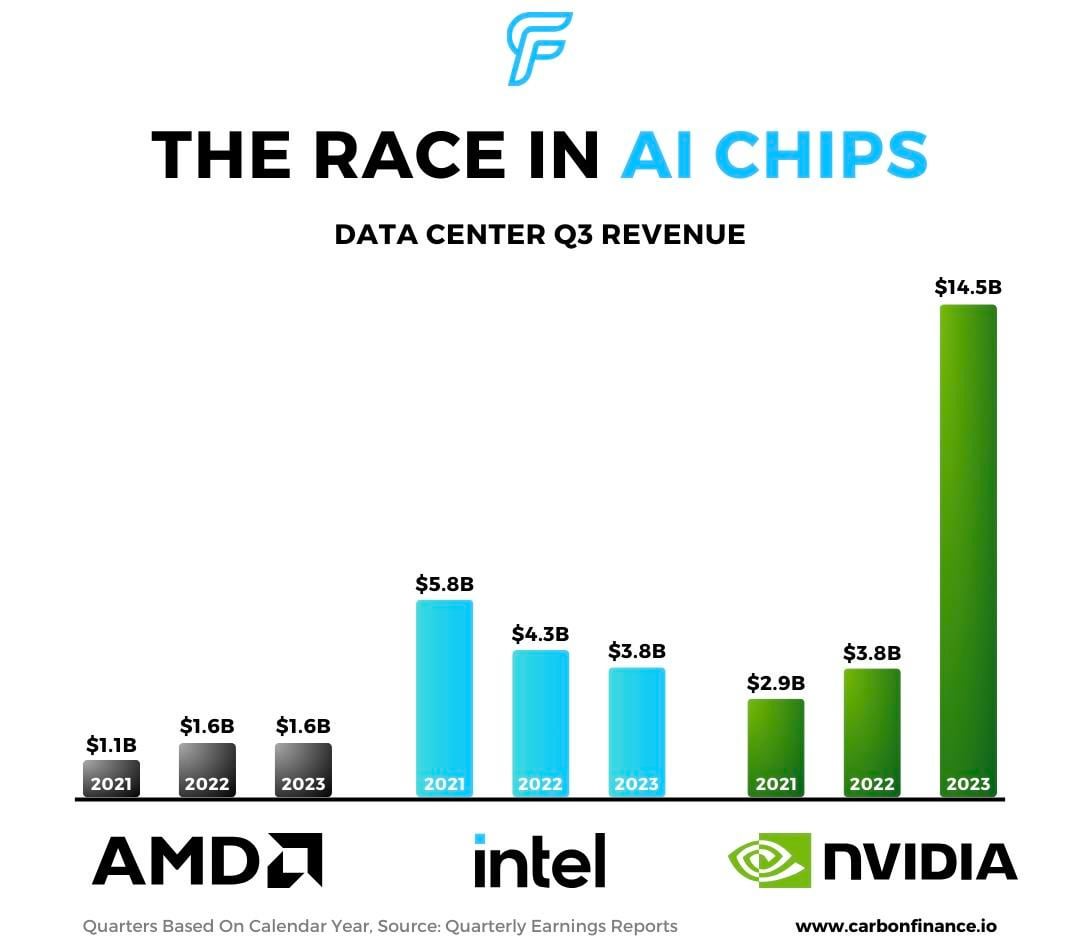
Table of Contents
The Engine of AI: What are AI Chips and Why Are They Critical?
At its core, an AI chip, or AI accelerator, is a specialized class of processor meticulously engineered to handle the computationally intensive demands of artificial intelligence workloads. Unlike general-purpose CPUs (Central Processing Units) that are designed for a wide array of tasks, AI chips excel at specific operations crucial for machine learning and deep learning algorithms, such as parallel processing for matrix multiplications and neural network computations.
Evolution of AI Processors
The evolution began with general-purpose CPUs, which, while capable, proved inefficient for large-scale AI. Then came GPUs (Graphics Processing Units), initially conceived for rendering complex graphics in gaming, but serendipitously discovered to be exceptionally adept at parallel processing, making them ideal for AI model training. This led to Nvidia’s early dominance. Today, the landscape also includes ASICs (Application-Specific Integrated Circuits) and custom silicon—chips designed from the ground up for particular AI tasks, offering superior efficiency and performance for specific applications.
The Critical Role in AI Advancement
These chips are not merely components; they are the «brains» or the «nervous system» of artificial intelligence, indispensable for accelerating the training of colossal AI models, enabling real-time inference in applications from autonomous vehicles to advanced medical diagnostics, and powering the breakthroughs that define our AI-driven future. Without these specialized processors, the ambition of generative AI and other sophisticated AI systems would remain largely theoretical.
The Key Players and Their Strategies
The AI chip race is dominated by a few established titans and a growing cohort of ambitious challengers. Leading the pack is Nvidia, whose GPUs—particularly the H100 and A100 series—have become the de facto standard for AI development and deployment. Nvidia’s ecosystem, anchored by its CUDA software platform, provides a comprehensive toolkit that makes its hardware indispensable for developers, creating a powerful moat around its market leadership.
Challengers and Innovators
- AMD: Striving to carve out a larger share with its Instinct MI series GPUs, offering competitive alternatives and aggressively expanding its software stack to rival CUDA.
- Intel: A traditional CPU giant, making significant strides in AI with its Gaudi accelerators (via Habana Labs) and investing heavily in its foundry services to become a major manufacturer for others, aiming to be a central player in the entire semiconductor supply chain.
- Broadcom: Plays a crucial, though often less visible, role, focusing on networking chips that connect these powerful AI accelerators and designing custom silicon for hyperscale data centers.
Tech Giants’ Custom Silicon Strategy
Beyond these traditional chipmakers, the hyperscale cloud providers—Amazon (AWS), Microsoft, Google, and Meta—represent a formidable force. Recognizing the strategic importance and cost implications, these giants are investing billions in designing their own custom AI chips. AWS has Inferentia for inference and Trainium for training. Google pioneered the Tensor Processing Unit (TPU), specifically optimized for its AI workloads. Microsoft is developing its own Maia AI accelerator and Athena chips, while Meta is also pursuing custom silicon initiatives. This strategy allows them to optimize performance for their specific software stacks, reduce dependency on external suppliers, and gain a significant cost advantage, reshaping the fundamental dynamics of the AI infrastructure market. The ecosystem is further enriched by a vibrant array of startups pushing the boundaries with novel architectures, specialized accelerators, and energy-efficient designs, ensuring continuous innovation in this critical sector.
Market Dynamics and Economic Impact
The AI chip race is characterized by an unprecedented investment boom. Billions of dollars are pouring into research and development, manufacturing expansion, and talent acquisition across the semiconductor industry. Venture capital funding for AI chip startups has surged, reflecting investor confidence in the sector’s long-term growth potential.
Supply Chain Challenges and Geopolitics
However, this fervent demand has also exposed and exacerbated significant supply chain challenges. The semiconductor industry, already grappling with shortages, now faces immense pressure to ramp up production of advanced AI chips. Geopolitical tensions, particularly concerning access to advanced manufacturing capabilities (with Taiwan’s TSMC being a critical global player), underscore the strategic importance of secure and diversified supply sources. Nations are investing heavily in domestic chip production facilities, recognizing national security and economic sovereignty ties to semiconductor independence. The global AI Chip Market, according to MarketsandMarkets, is projected for significant growth, highlighting the immense economic stakes.
Broader Economic Ripple Effects
The economic ripple effects of this race are profound and far-reaching. Data centers, the backbone of the digital economy, are undergoing massive transformations, upgrading infrastructure to house these powerful, energy-hungry chips. Cloud computing providers are re-architecting their services around AI capabilities. Software development paradigms are shifting to leverage the unique architectures of AI accelerators. National economies are experiencing both the benefits of innovation and the strain of competition, with governments worldwide prioritizing investments in AI and semiconductor technologies. The astronomical market capitalization growth of companies like Nvidia—reaching multi-trillion-dollar valuations—is a stark indicator of the perceived value and future revenue potential locked within the AI chip market, signaling a fundamental shift in economic power within the tech landscape.
The Road Ahead: Challenges and Opportunities
The path forward in the AI chip race is fraught with formidable challenges but also brimming with groundbreaking opportunities. On the technical front, engineers are confronting the fundamental limits of silicon: managing immense heat dissipation, optimizing power consumption (a major concern for large AI data centers), and pushing the boundaries of transistor density (following Moore’s Law, which is increasingly difficult to sustain). Advances in materials science are crucial for developing next-generation components. Manufacturing complexities are escalating rapidly, with the cost and precision required for advanced fabrication nodes becoming astronomical, limiting the number of players who can compete at the bleeding edge. A significant talent gap persists, with a global shortage of highly skilled engineers specializing in chip design, AI algorithms, and semiconductor manufacturing, posing a bottleneck to innovation. Furthermore, while AI is used to optimize manufacturing, there are limitations of AI in manufacturing, particularly concerning data quality and quantity for fine-tuning complex production processes.
Emerging Opportunities in AI Hardware
- New Architectures: Researchers are exploring entirely new architectures beyond traditional von Neumann designs, including neuromorphic computing (mimicking the human brain), analog computing, quantum-inspired processors, and resistive computing, all promising greater energy efficiency and speed for specific AI tasks.
- Advanced Packaging: Innovations in advanced packaging techniques are becoming critical, enabling multiple chiplets to be integrated into a single, high-performance package, effectively bypassing some of the physical limitations of monolithic chips.
- Open-Source Hardware: The rise of open-source hardware initiatives, such as RISC-V, offers the potential to democratize chip design, fostering greater innovation and reducing entry barriers.
- Sustainability: With the increasing environmental footprint of large-scale AI, a strong emphasis on sustainability is emerging, driving the development of more energy-efficient AI chips and computing infrastructure to mitigate climate impact.
Conclusion
The AI chip race is unequivocally one of the most pivotal technological competitions of our time, driven by the insatiable demand for increasingly powerful artificial intelligence. It’s a high-stakes arena where established tech titans and agile startups alike are pouring resources into designing, manufacturing, and deploying the hardware infrastructure that underpins our AI-driven future. While marked by formidable challenges—from technical limitations and manufacturing complexities to geopolitical tensions and talent shortages—it simultaneously unveils a landscape rich with opportunities for groundbreaking innovation in chip architectures, packaging, and sustainable computing. The outcome of this relentless pursuit for silicon supremacy will not merely dictate the fortunes of individual companies; it will profoundly shape the trajectory of technological advancement, influencing everything from the efficiency of enterprise AI solutions to the intelligence embedded in our daily consumer applications. The race is on, and its finish line is constantly moving, promising a future meticulously carved out by the chips that power intelligence.
What do you think will be the next major breakthrough in AI chip technology? Share your thoughts in the comments below!